
Introduction
Although Jupiter has 27 moons in total, the four biggest ones (Io, Europa, Ganymede and Callisto) are commonly referred to as "Galilean moons" and were discovered by the Italian astronomer in January of 1610 after he made severe improvements to his telescope. They are among the biggest objects in the solar system (click tooltip-buttons for more info).
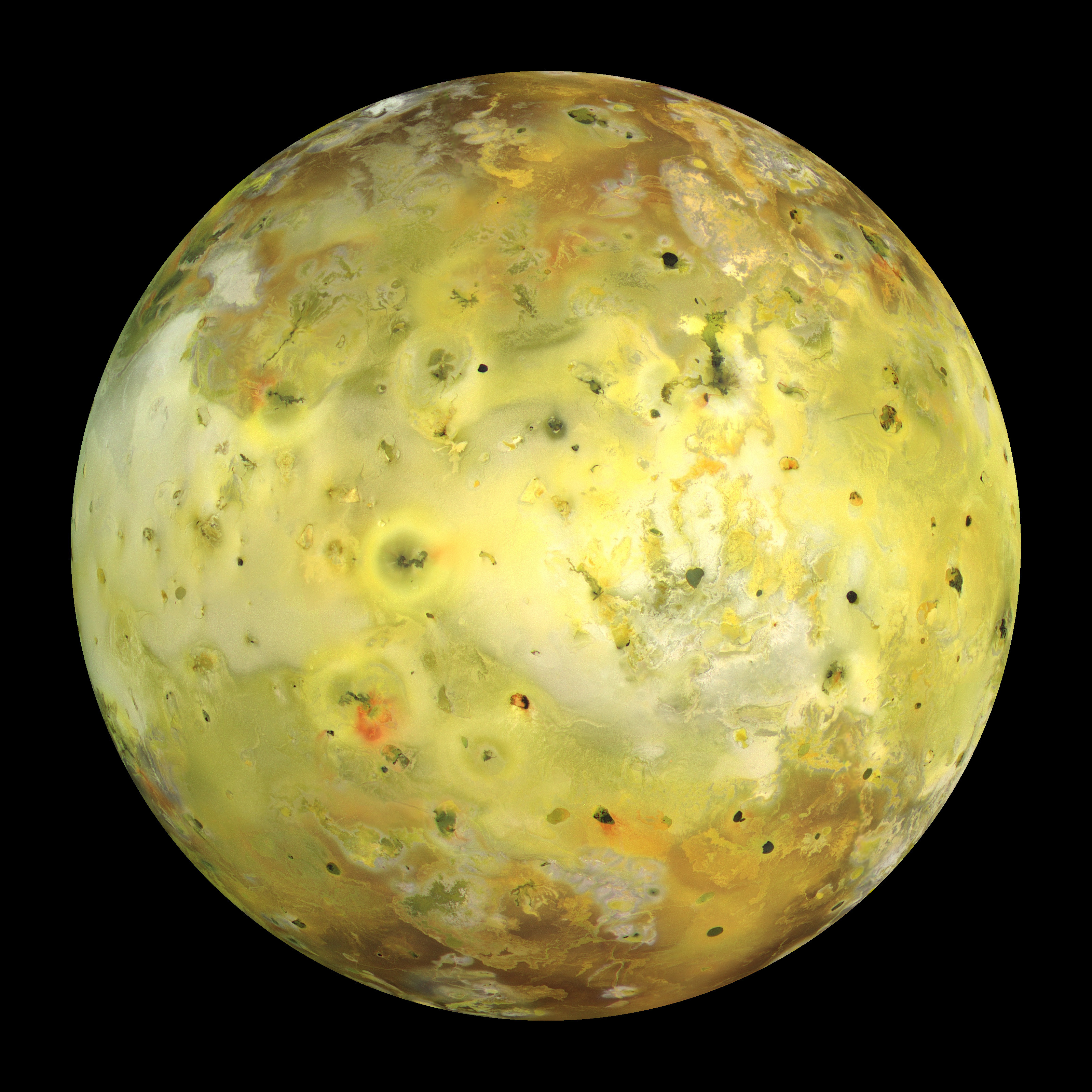
Io (Jupiter I) is the innermost of the four Galilean moons of the planet Jupiter. It is the fourth-largest moon, has the highest density of all the moons, and has the least amount of water of any known astronomical object in the Solar System. It was discovered in 1610 and was named after the mythological character Io, a priestess of Hera who became one of Zeus' lovers.
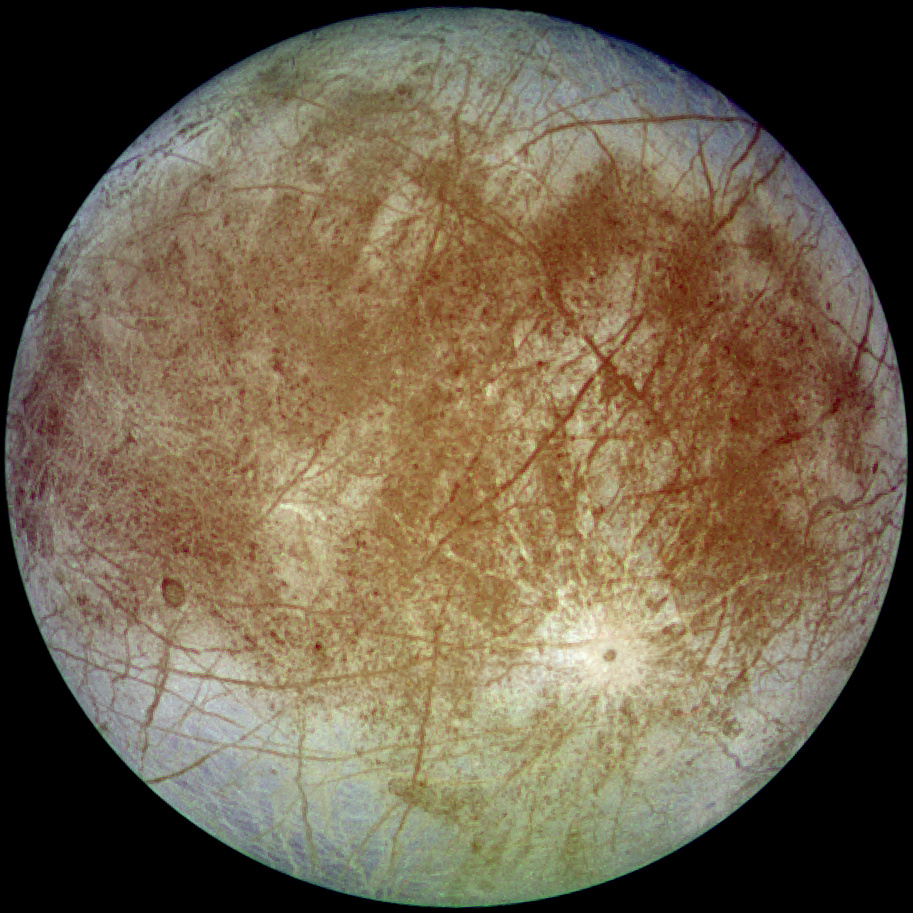
Europa (Jupiter II) is the smallest of the four Galilean moons orbiting Jupiter, and the sixth-closest to the planet of all the 79 known moons of Jupiter. It is also the sixth-largest moon in the Solar System. Europa was discovered in 1610 by Galileo Galilei[1] and was named after Europa, the Phoenician mother of King Minos of Crete and lover of Zeus (the Greek equivalent of the Roman god Jupiter).
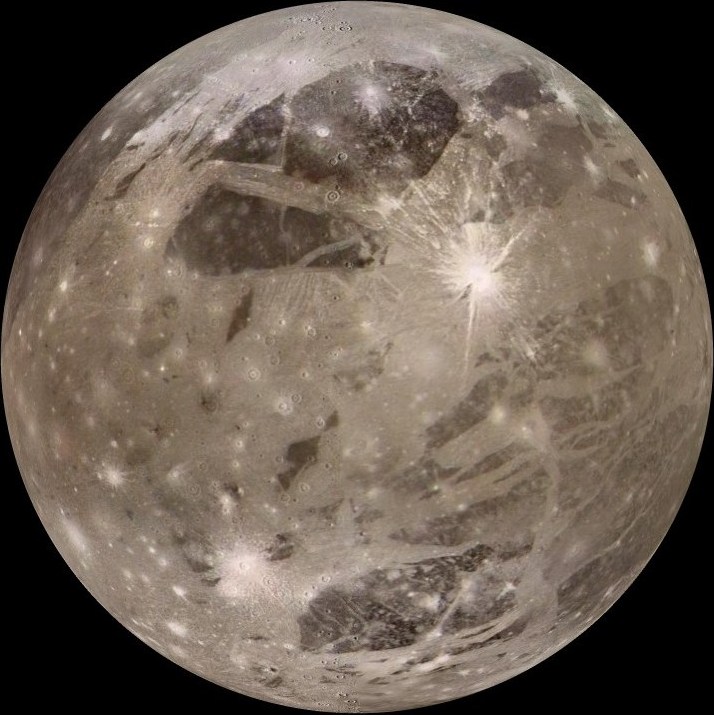
Ganymede (Jupiter III) is the largest and most massive moon of Jupiter and in the Solar System. The ninth largest object in the Solar System, it is the largest without a substantial atmosphere. Possessing a metallic core, it has the lowest moment of inertia factor of any solid body in the Solar System and is the only moon known to have a magnetic field.
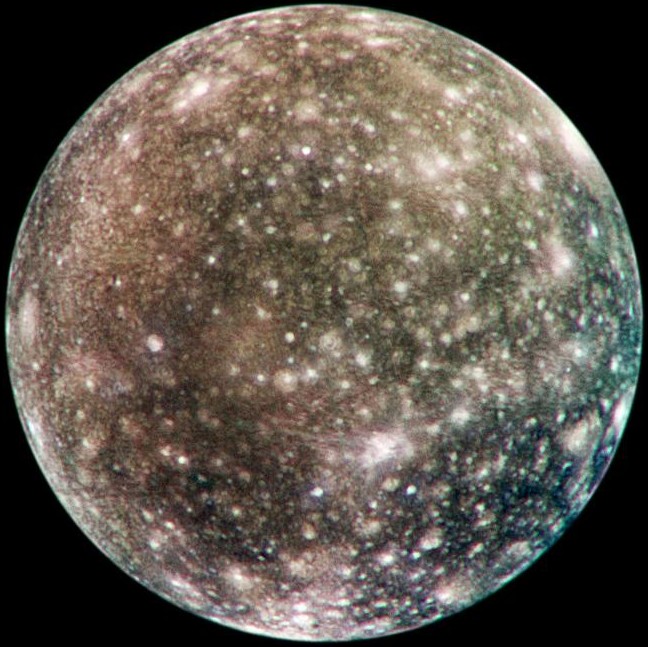
Callisto (Jupiter IV) is the second-largest moon of Jupiter, after Ganymede. The surface of Callisto is the oldest and most heavily cratered in the Solar System. Its surface is completely covered with impact craters. It does not show any signatures of subsurface processes such as plate tectonics or volcanism, with no signs that geological activity in general has ever occurred.